
Contents
Dolly Vaden, William "Bill" Edmonds, and the Story Preserved Inside The Bluff of 1930
When Historic Poplar Bluff acquired a copy of The Bluff, the 1930 Poplar Bluff High School yearbook, its value went beyond the photographs and names printed on its pages.
This particular copy had a history of its own.
On one of its pages, beneath the elaborate artwork printed by the yearbook staff, someone had written a name in pencil:
Dolly Vaden.
Attached to that same page was something obviously added much later—a white-and-green event badge. Across the top were the printed words "HELLO I'M." Beneath them someone had written:
Class of '30 Dolly Vaden Edmonds
The two names belonged to the same woman at different points in her life.
And once we began following them, another name emerged from the pages of the same yearbook:
William S. "Bill" Edmonds.
He had been Dolly's classmate.
Eight years after their graduation, he became her husband.
What followed was a life that carried the two former Poplar Bluff students hundreds of miles from Missouri while maintaining connections to the community and classmates they had known in their youth.
Meanwhile, Dolly's yearbook survived.
And it apparently continued changing.
Newspaper clippings were tucked among its pages decades after graduation. Former classmates were marked by hand. A reunion article was preserved. The later name badge remained attached to the book.
The result is an unusual historical object: a 1930 yearbook that preserves not only a graduating class, but traces of what happened as that class grew older.
Dolly Vaden
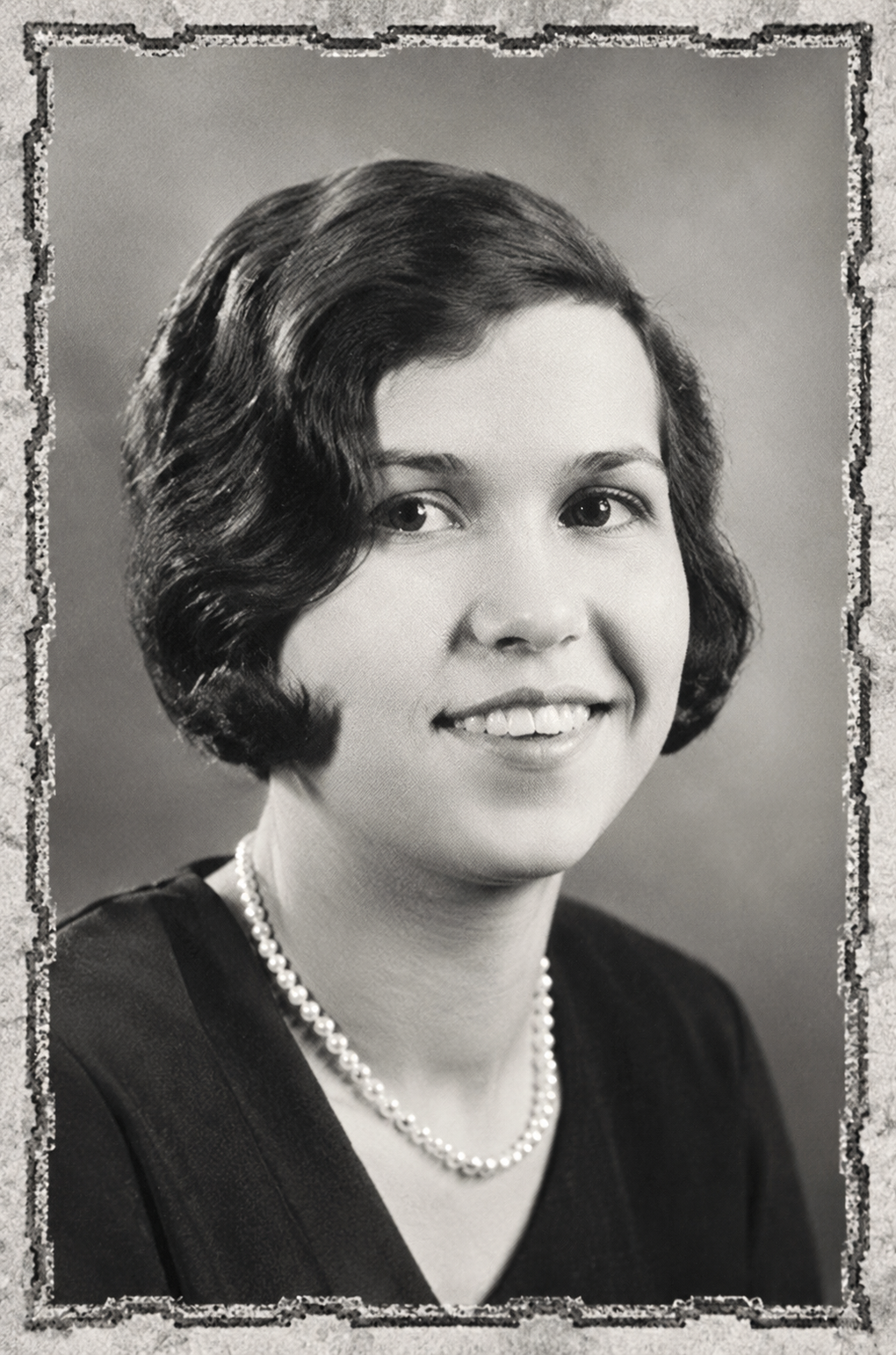
Dolly Madeline Vaden was born September 6, 1912, in Neelyville, Missouri.
She was the daughter of George and Esther Vaden. During her school years, the family lived at 621 Cynthia Street in Poplar Bluff.
Period city-directory evidence places the Vaden family there and identifies George Vaden with the local timber industry. The 1926 directory, for example, lists George and Esther at 621 Cynthia and describes George as a timber buyer.
Newspaper references allow us to follow Dolly from childhood into young adulthood.
In May 1919, when she was six years old, a Poplar Bluff newspaper mentioned little Dolly Vaden while she and her mother were visiting her grandparents.
By her teenage years, Dolly was participating in school, church and musical activities. In 1926 she appeared in a recital given by pupils of Mrs. C. H. Dicus, performing a sextette from Donizetti's Lucia.
But it was Dolly's academic record that increasingly distinguished her.
A 96.5 Average and the Hays Medal
In May 1926, 112 students graduated from Central School in Poplar Bluff.
Dolly was among them.
She completed her studies with an average of 96.5 percent and received the Hays Medal.
The newspaper explained that the medal recognized proficiency in English, scholastic standing and the highest grade on a recent thesis.
Dolly's thesis was titled "The Cost of Carelessness."
She was thirteen years old.
That achievement was not an isolated one.
Dolly continued establishing herself as one of Poplar Bluff's strongest students after entering high school.
"Miss Dolly Vaden Has Highest Rank in High School"
On November 28, 1929, the Poplar Bluff Republican published a headline that left little ambiguity:
"Miss Dolly Vaden Has Highest Rank In High School."
The newspaper reported that Dolly, then a senior, ranked highest in scholastic attainment at Poplar Bluff High School after grades for the students had been reviewed.
The surviving newspapers also provide glimpses of Dolly beyond her academic accomplishments.
On New Year's Eve 1929, she entertained sixteen girlfriends at the Vaden home at 621 Cynthia Street. They played pinochle until 11 o'clock, prizes were awarded, and the young women danced after the arrival of the New Year. Dolly's mother assisted with the gathering and served a late luncheon.
These small newspaper notices are useful because they restore some ordinary life around the academic record.
Dolly wasn't simply a name appearing at the top of a class ranking.
She was a teenager growing up in Poplar Bluff.
The Class of 1930
On May 15, 1930, the Daily American Republic announced the academic leaders of that year's graduating class.
Dolly Vaden was valedictorian.
Arthur Powers was salutatorian, and the newspaper listed Dolly among the class's leaders in scholarship.
That year's senior class also produced Volume 11 of The Bluff.
The copy eventually acquired and digitized by Historic Poplar Bluff was Dolly's.
And somewhere among the other members of the Class of 1930 pictured inside was another young Poplar Bluff student:
William S. "Bill" Edmonds.
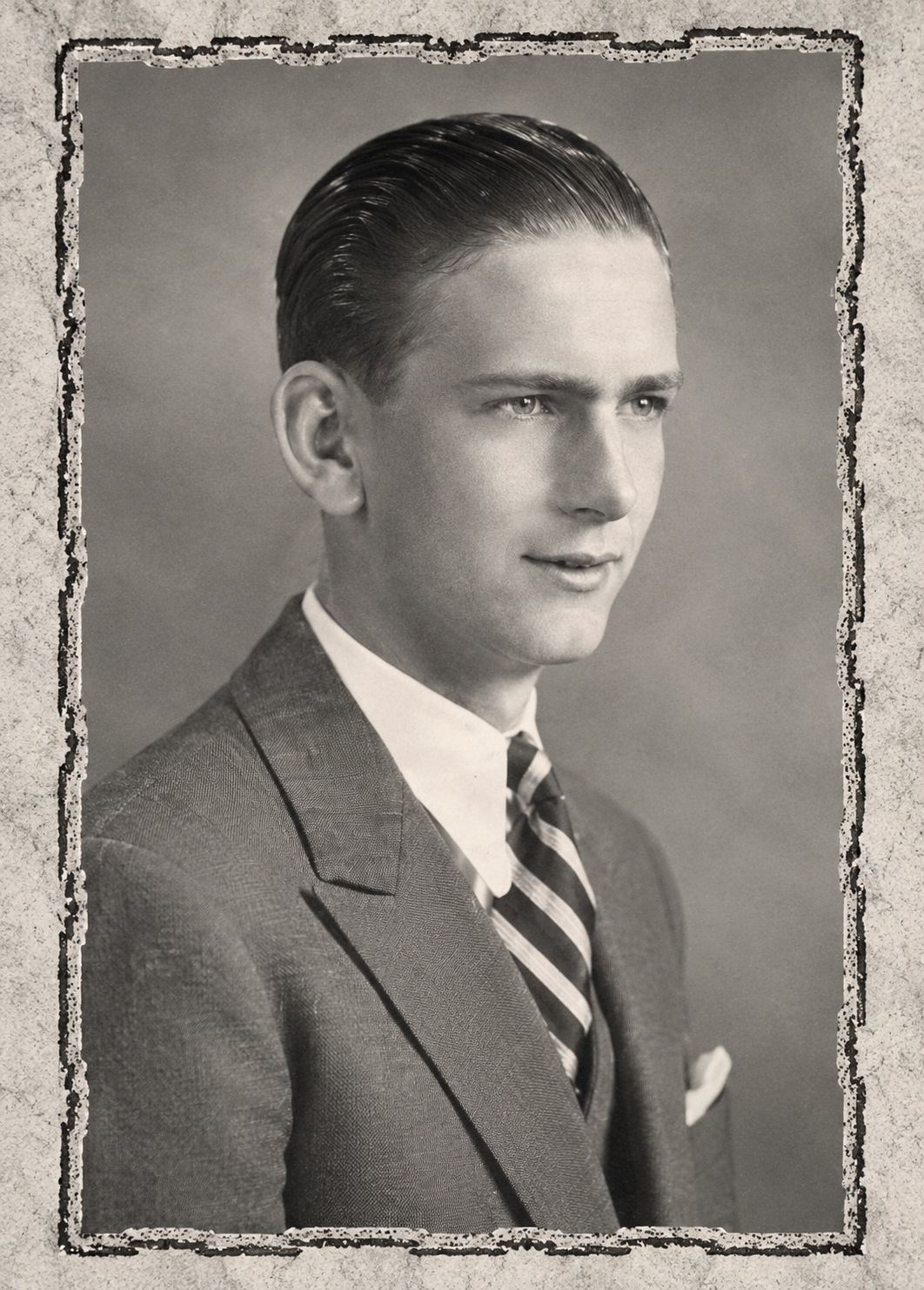
At that point they were classmates.
The story preserved by later records would eventually make their appearances in the same yearbook much more significant.
Life After Poplar Bluff High School
Both Dolly and Bill continued their educations after graduation.
Dolly attended William Woods in Fulton, Missouri, for her first two years of college and later attended Southwest Missouri State Teachers College in Springfield.
Her academic success continued there.
In March 1933, the Daily American Republic reported that Dolly had been listed in the Springfield college newspaper as one of only twelve students in the entire student body to attain the institution's highest scholastic standard during the term.
The newspaper remarked that Dolly had performed excellent work throughout both high school and college.
She ultimately graduated from Southwest Missouri State Teachers College with honors.
Then she came home.
Miss Vaden Becomes a Teacher
Dolly returned to Poplar Bluff and taught geography in the junior high school for four years.
Later newspaper accounts also described her as an accomplished art student and teacher, and she belonged to Poplar Bluff's Fine Arts Club.
Her own education continued as well.
Dolly undertook postgraduate summer study at the University of Wyoming in Laramie.
Bill Edmonds had traveled west, too.
Bill was born February 1, 1911, at Leeper in Wayne County, Missouri. His family later settled in Poplar Bluff, where he attended school and graduated in the Class of 1930.
He eventually entered the University of Wyoming's law school.
Later accounts reported that Bill worked his way through the university, received apprentice training in the office of the prosecuting attorney of Albany County, and was admitted to practice law in Wyoming in 1938.
By then, Dolly and Bill's lives were about to come together again.
An Approaching Marriage
On August 9, 1938, the Daily American Republic carried a small notice under the heading "Teachers Resign."
It reported that Dolly Vaden's resignation had been read and approved.
After four years teaching geography at Poplar Bluff Junior High School, she was leaving because of her approaching marriage to Bill Edmonds of Laramie, Wyoming.
Later that same month, the newspaper carried a much fuller account.
Information had reached Poplar Bluff that Dolly Vaden, daughter of Mr. and Mrs. George Vaden, had married William Edmonds in Laramie.
The ceremony took place at the Presbyterian Church, with the Rev. E. C. Dodd officiating.
Dolly wore a street-length slate-blue dress with matching accessories and a contrasting warm shade of wine. She carried rosebuds.
Her sister and brother-in-law, Mr. and Mrs. John Cockburn of Artesia, New Mexico, traveled to Laramie for the wedding. Mrs. Cockburn served as matron of honor, while Dr. Alfred Larson of the University of Wyoming was Bill's best man.
There is a minor discrepancy in the surviving records.
The contemporary Poplar Bluff wedding announcement and later genealogical material place the marriage on August 27, 1938. Bill's obituary, written more than six decades later, gives August 26.
Rather than silently choosing between them, we preserve the discrepancy. The contemporary evidence favors August 27.
Eight years after appearing together in the Class of 1930, Dolly Vaden and Bill Edmonds were married.
From Poplar Bluff to Kemmerer
In May 1939, Dolly and Bill settled in Kemmerer, Wyoming.
Bill established a law office there.
It became a remarkably long career.
Later accounts credited him with approximately 50 years in legal practice and service as Lincoln County's County and Prosecuting Attorney. A 1964 account of his career stated that he had served eight years in that capacity.
His work extended beyond private practice.
Bill provided legal services to Wyoming communities including Cokeville, Diamondville and Kemmerer. Newspaper accounts credited him with legal work connected with the South Lincoln Hospital District, the organization of a fire-protection district in Upper Star Valley and the incorporation of the Town of Thayne.
He also performed years of uncompensated Selective Service work providing legal assistance to members of the armed services.
His community involvement extended further.
Bill was active in the Methodist Church, served with the Kemmerer Lions Club, and was a longtime Freemason. His obituary later reported that he had been a member of Kemmerer Masonic Lodge No. 33 for fifty years and had conducted numerous Masonic funerals over approximately three decades.
He was also associated with the Scottish Rite and Shrine.
Eventually he received a Distinguished Service Award recognizing 60 years as a member of the Wyoming State Bar.
Dolly Continued Her Education
Dolly's educational story had not ended with her departure from the Poplar Bluff classroom.
A 1964 Wyoming newspaper profile of Bill reported that Dolly held a master's degree from the University of Wyoming.
The sources we have reviewed do not yet establish the exact year or subject of that degree, so we do not attempt to supply either.
What the surviving evidence does reveal is an impressive educational progression:
the thirteen-year-old Central School graduate with a 96.5 average became Poplar Bluff High School's valedictorian, graduated from college with honors, returned home as a teacher, pursued postgraduate work and eventually earned a master's degree.
Dolly and Bill had one daughter, Mary Esther. In 1964, she was reported to be a junior at the university.
Bill Edmonds and Public Life in Wyoming
By 1964, Bill Edmonds had practiced law in Kemmerer for more than twenty-five years.
That year he announced his candidacy for Judge of Wyoming's Third Judicial District.
The campaign announcement provides one of the fullest surviving descriptions of his professional and civic life.
It described his legal career, public service, church membership, Lions Club work and Masonic involvement.
Bill explained that he believed a judge should approach the office with integrity and fairness and evaluate the qualifications of those appearing before the court.
Whether or not the campaign ultimately brought him the judgeship, the article is valuable because it captures how the former Poplar Bluff student had established himself professionally a quarter-century after leaving Missouri.
Outside his profession, Bill enjoyed fly fishing with flies he tied himself and trap shooting using his own reloads. He also participated in organizing the Kemmerer Gun Club.
Yet Poplar Bluff occasionally reappeared in the record.
Still Remembered in Poplar Bluff
When Bill was elected prosecuting attorney in Wyoming, the news reached his former hometown.
A Poplar Bluff newspaper identified him as a graduate of the Poplar Bluff High School Class of 1930.
The article also identified his wife as the former Dolly Vaden and noted that she had graduated in the same class.
Dolly's mother, Esther Vaden, remained in Poplar Bluff, and the newspaper reported on an extended visit she made to her daughter and son-in-law in Wyoming.
Decades passed.
Then the Class of 1930 began looking for one another again.
"Bill and Dolly Vaden Edmonds"
On November 12, 1980, the Daily American Republic published an article announcing reunion preparations involving former Poplar Bluff High School students.
Organizers were searching for members of the classes of 1930 through 1932.
Among the Class of 1930 alumni they were attempting to locate were:
"Bill and Dolly Vaden Edmonds."
It had been fifty years since their graduation.
And inside Dolly's surviving yearbook is another piece of evidence from that period.
The Reunion Clipping
On May 18, 1981, the Daily American Republic reported:
"Classes Combine Reunion."
Members of the Poplar Bluff High School classes of 1930, 1931 and 1932 had gathered in Poplar Bluff for a combined reunion.
For many, the newspaper reported, it was the first time they had seen one another in half a century.
Part of the weekend included a tour of their old high-school building in the 500 block of Vine Street. The building had ceased serving as the high school in 1957 and later became the first home of Three Rivers Community College.
The reunion newspaper page was saved.
Eventually, it ended up inside Dolly's 1930 yearbook.
And then there is the name badge.
"HELLO I'M — Class of '30"
Attached to one of the pages in Dolly's yearbook is an event-style adhesive badge.
Printed in green is:
HELLO I'M
Written by hand beneath it:
Class of '30 Dolly Vaden Edmonds
Its exact date and event are unknown.
It is tempting to identify it as Dolly's badge from the 1981 reunion. The circumstantial evidence is certainly intriguing: organizers were searching for Bill and Dolly in late 1980; the reunion took place in May 1981; coverage of that reunion survives inside Dolly's yearbook; and a Class of '30 badge bearing Dolly's married name is attached to the book.
But none of those facts proves that the badge came from that particular event.
It could have been worn at another class gathering.
So we leave the question open.
What we can say is that at some point after becoming Dolly Vaden Edmonds, Dolly—or someone preserving material associated with her—retained an event badge identifying her by both her Class of 1930 and the name by which former classmates would have known her.
The Yearbook Kept Changing
The reunion material is not the only later addition.
Throughout Dolly's copy of The Bluff, many of the people pictured have been marked by hand.
Some have checkmarks.
Beside many others appears a much sadder handwritten notation:
"dead."
We do not know when those marks were made.
Nor can we prove Dolly made all—or even any—of them herself.
That distinction matters.
But whoever made them was apparently revisiting the people pictured in the yearbook and recording information that became known after 1930.
Other material was saved inside as well.
Pieces of Poplar Bluff Preserved Between the Pages
Among the loose material found with Dolly's yearbook are newspaper clippings concerning Poplar Bluff people, places and events many decades after her graduation.
One is a March 31, 1991 Daily American Republic column about television writer and Poplar Bluff native Linda Bloodworth-Thomason. The article focused heavily on Bloodworth-Thomason's continued affection for and support of her hometown despite living elsewhere.
Another clipping reports the destruction by fire of the historic Jane Abington Haworth home at 640 N. Main Street. The article described the house as having been built in 1912 by Ed L. Abington and noted its connection to the Bank of Poplar Bluff.
Another is the obituary of longtime Poplar Bluff businessman Charles W. "Bud" Mussell Jr.
Some of these pieces bear handwritten dates.
We cannot know why each article was selected, who clipped it, or precisely when it was placed inside the book.
That prevents us from saying something appealing but unsupported such as, "Dolly followed Poplar Bluff news throughout her life."
Perhaps she did.
The surviving material simply does not prove it.
What it does establish is that Dolly's 1930 yearbook eventually became the repository for Poplar Bluff material dating many decades beyond the year printed on its cover.
The Yearbook That Grew Old With Its Class
That may be the most remarkable part of this particular copy of The Bluff.
When the book was printed in 1930, its purpose was to capture a moment.
Its pages preserved the graduating seniors, teachers, activities, organizations and memories of a school year.
But this copy did not remain frozen in that moment.
Someone continued interacting with it.
Dolly's original handwritten name remained inside.
Later came a badge bearing her married name and identifying her as a member of the Class of '30.
A newspaper article documented the reunion of that class half a century later.
Classmates were marked by hand as their lives progressed.
Newspaper clippings preserved people, buildings and events in the Poplar Bluff they had once known.
Exactly who added every item cannot now be determined.
That uncertainty is itself part of responsible archival work. Where the evidence stops, the story must stop with it.
But the physical evidence allows us to say something important:
The history of this particular yearbook continued long after 1930.
Nearly 62 Years Together
Bill's life came to an end on June 23, 2000.
He died at South Lincoln Medical Center in Kemmerer at age 89 following respiratory failure after a partial recovery from a leg fracture sustained in a fall.
His obituary looked back across his long career in Wyoming.
But when it reached the beginning of his story, it returned to Poplar Bluff.
Bill's family had settled there. He had attended its schools. And he had graduated from high school in the same class as Dolly Vaden, "who was later to become his wife."
Dolly survived him.
They had been married for nearly 62 years.
Five years later, on December 19, 2005, Dolly Madeline Vaden Edmonds died in Hockessin, Delaware, at the age of 93.
The two members of Poplar Bluff High School's Class of 1930 had spent most of their adult lives far from the city where they had gone to school together.
But the book from that year survived them both.
Preserving Dolly's Copy
When Historic Poplar Bluff digitized The Bluff of 1930, we intentionally preserved the evidence of the physical copy wherever practical.
That includes handwriting.
Checkmarks.
Later notations.
Signs of wear.
Dolly's name.
And the other traces left behind during the book's long life.
They are not part of The Bluff as the senior class originally published it.
They are part of the history of Dolly's copy of The Bluff.
That distinction is why provenance matters.
A perfectly clean copy might give us a better reproduction of the printed yearbook.
Dolly's copy gives us something else.
It gives us the yearbook—and a portion of the life that happened afterward.
Two Classmates, One Surviving Book
In 1930, Dolly Vaden and Bill Edmonds were two students preparing to leave Poplar Bluff High School.
Dolly was the valedictorian.
Bill was one of her classmates.
Neither their photographs nor the pages surrounding them could reveal what the next seventy-five years would bring.
Dolly would continue an exceptional education, become a teacher and eventually earn a master's degree.
Bill would become an attorney and build a legal career lasting approximately half a century.
Eight years after graduation, they married.
They built their home in Wyoming, raised a daughter and remained together for nearly sixty-two years.
Meanwhile, the old green yearbook survived.
Its pages aged.
Names changed.
Classmates gathered again.
Some passed away.
Pieces of Poplar Bluff news found their way between its pages.
And nearly a century after Dolly first wrote her name inside, the book returned to the historical record as something more than another copy of a school annual.
It is a surviving artifact connected to the lives of the people pictured inside it.
A yearbook begins as a record of one year.
Sometimes, if we're fortunate enough to preserve it, it becomes a record of remembering.
Explore the Original Yearbook
The Bluff, Volume 11, was published by the seniors of Poplar Bluff High School in 1930. Dolly Vaden Edmonds's copy has been digitized as HPB-YB-1930 for the Historic Poplar Bluff Digital Archives.
Explore the complete yearbook: The Bluff — 1930 Digital Archive
Photos
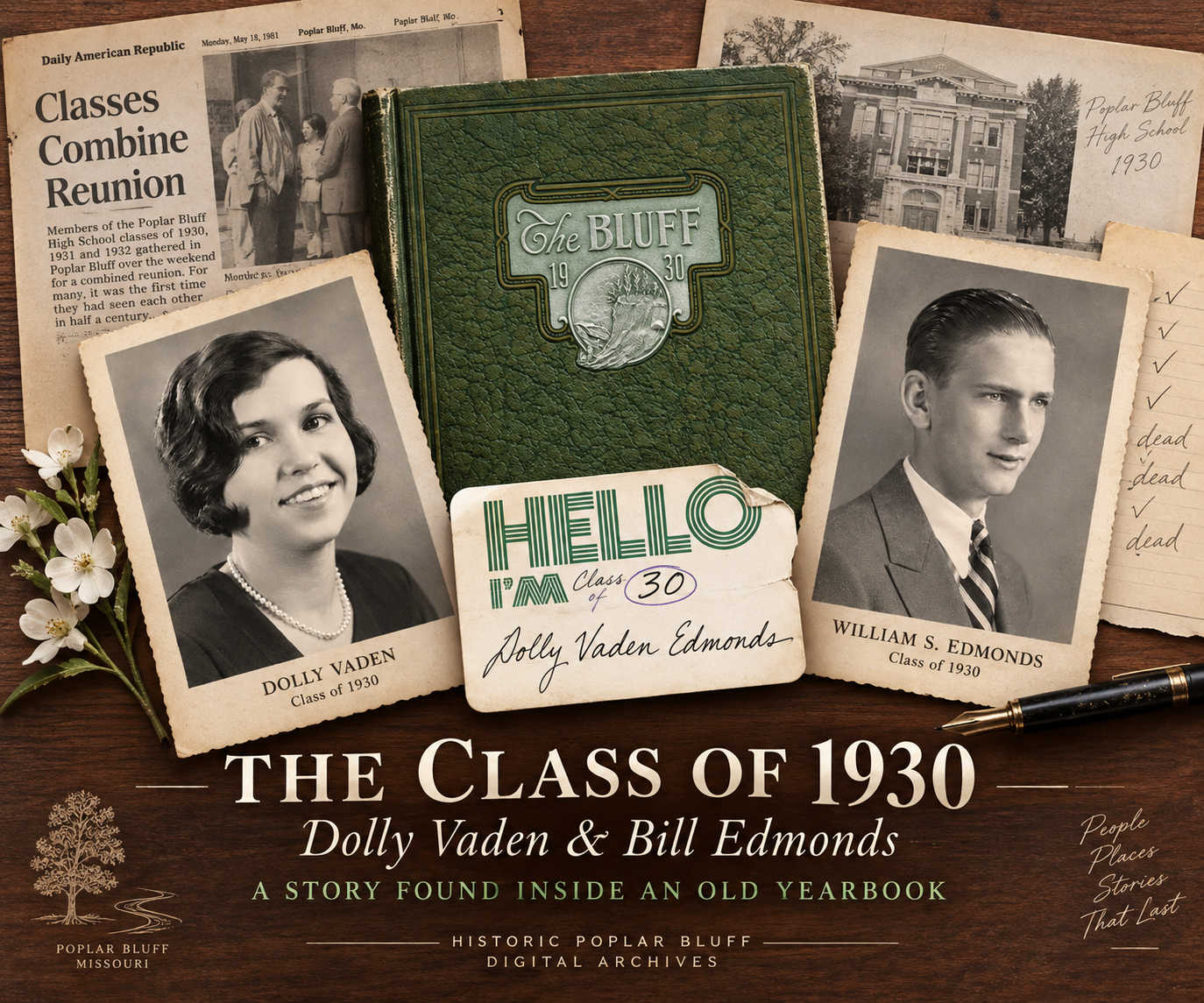
Story montage featuring portraits of Dolly Vaden and William Edmonds, the 1930 yearbook, reunion clippings, and reunion name badge
Portrait of Dolly Vaden from the 1930 Poplar Bluff High School yearbook
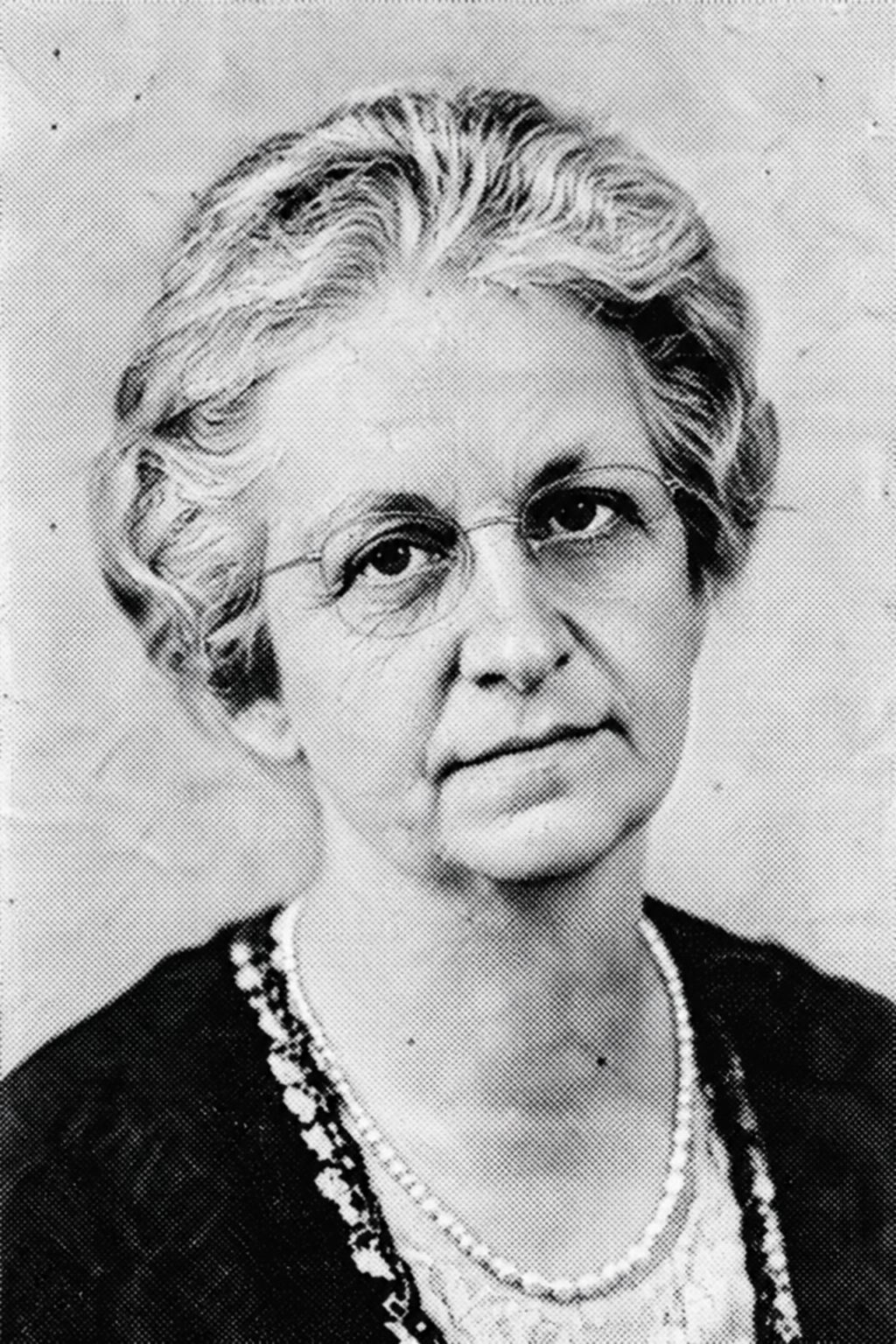
Portrait of Esther Vaden from the Daily American Republic, May 21, 1936
Portrait of William S. Edmonds from the 1930 Poplar Bluff High School yearbook
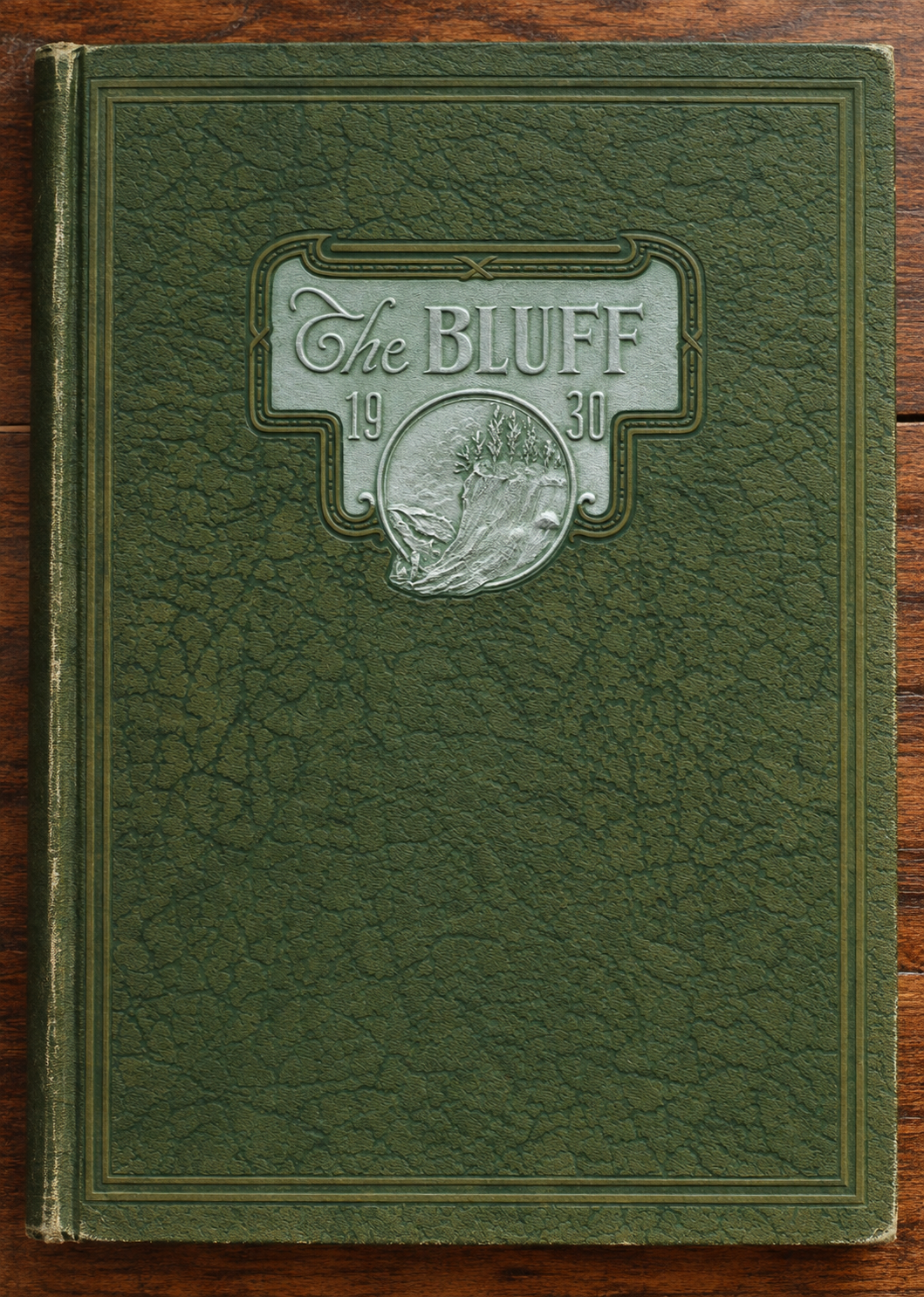
Cover of the 1930 edition of The Bluff, the Poplar Bluff High School yearbook
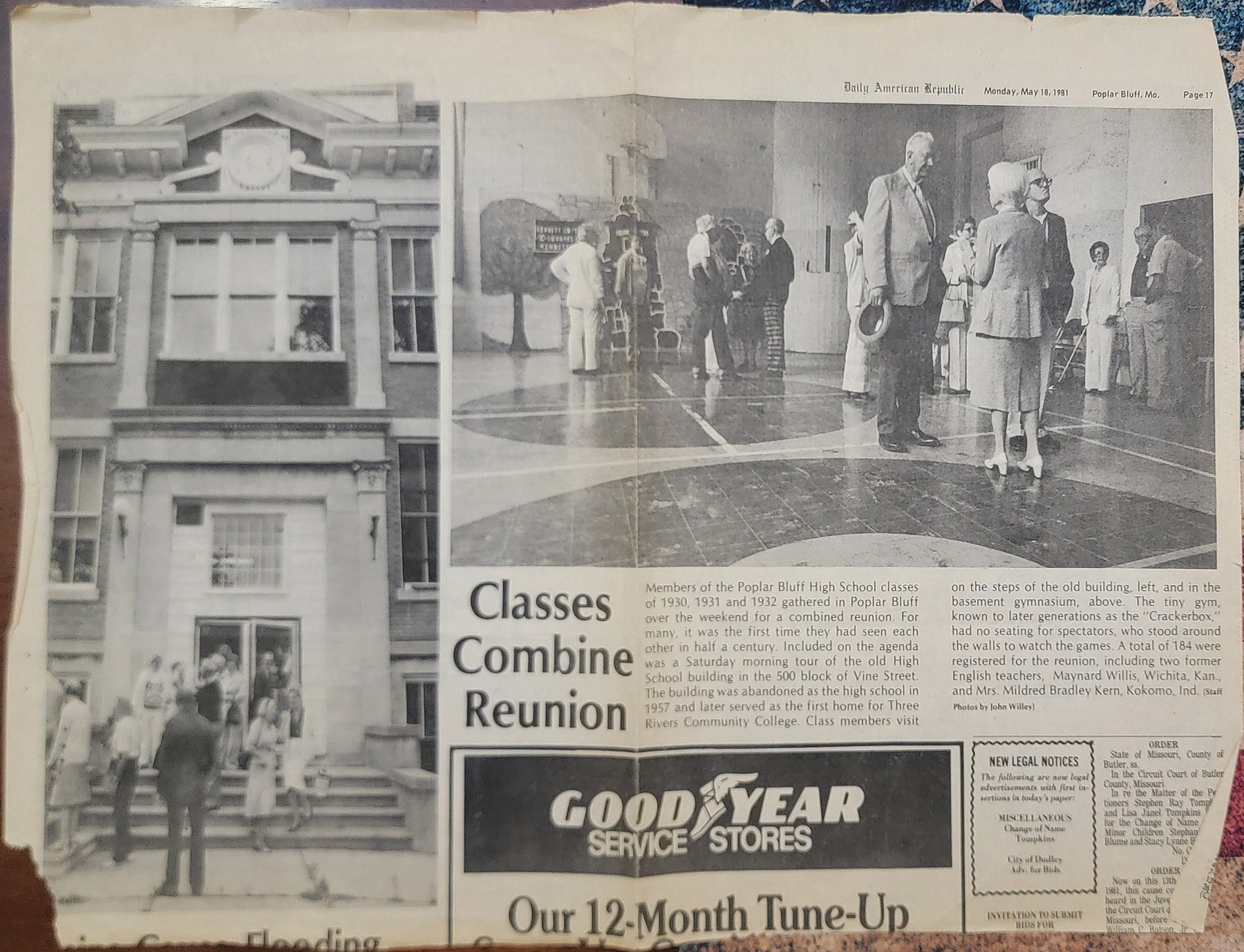
Clipping from the Daily American Republic covering the May 1981 combined reunion of the classes of 1930, 1931, and 1932 at the old high school building
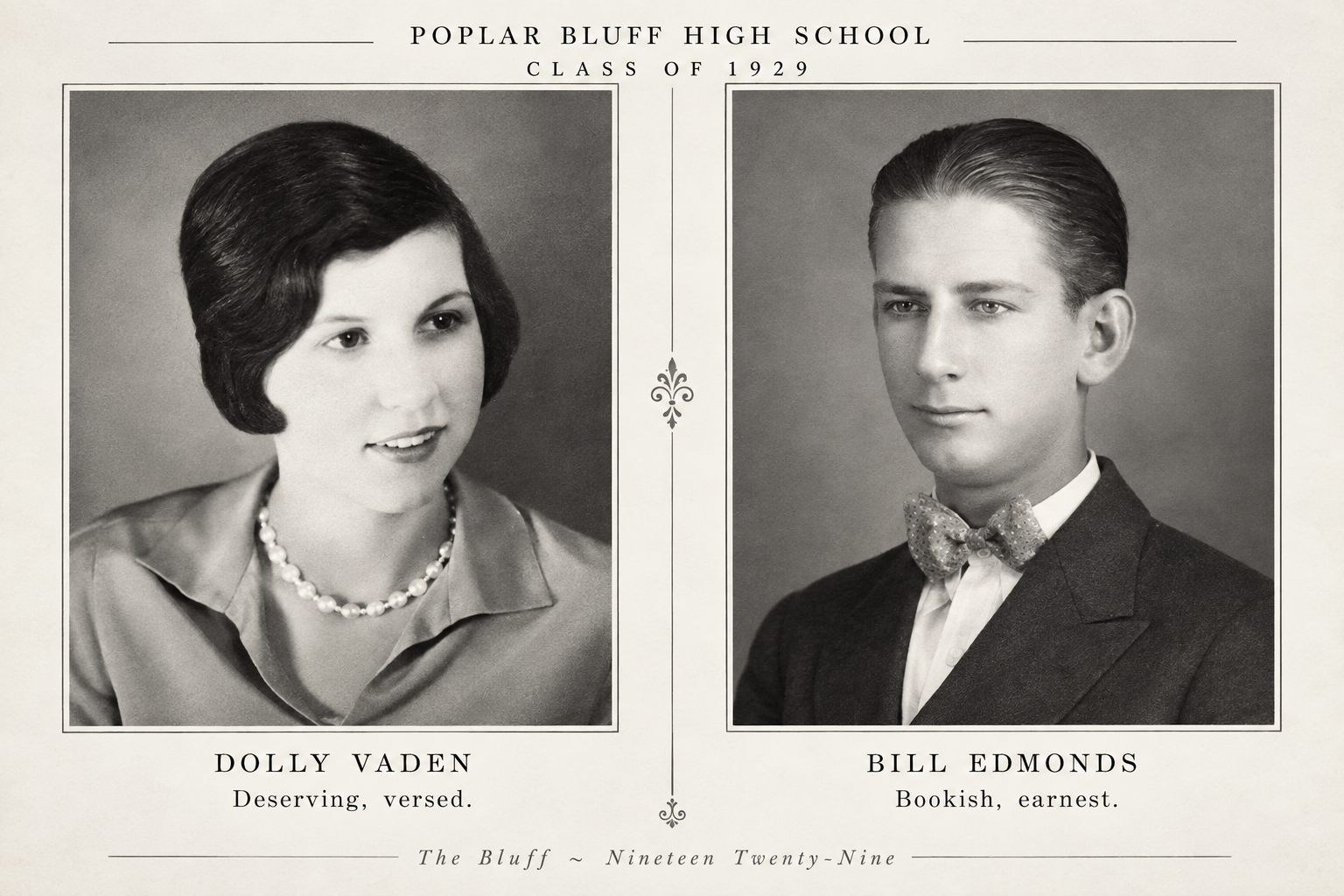
Portraits of Dolly Vaden and Bill Edmonds from the 1929 edition of The Bluff
Historic Poplar Bluff
Story Contributor
Source:
The Bluff (1930), Poplar Bluff High School yearbook — Dolly Vaden Edmonds's personal copy (HPB-YB-1930-001), Historic Poplar Bluff Collection
Related Historic Site
