
Contents
Sometimes there is no grand plan behind historical research.
Sometimes you simply open an old book and find someone's name inside.
That is essentially how this story began.
Among the old Poplar Bluff material that has made its way into our collection are three Bluff yearbooks. Two of them, from 1929 and 1931, once belonged to Paul C. Hays Jr. A third, from 1935, belonged to Joel Hays.
The books themselves had survived. The young men who once turned their pages were long gone.
So who were Paul and Joel Hays?
Answering that simple question led much farther than expected.
It led to one of Poplar Bluff's longtime bankers. It led back to the old high school. It crossed the Atlantic during World War II. It led into a little record shop, then into one of downtown Poplar Bluff's best-remembered music stores. It reached the historic Begley Building and eventually the Rodgers Theatre.
And, appropriately enough, it led straight back into the preservation of local history itself.
The Banker
The story begins a generation before the names in our yearbooks.
Paul C. Hays Sr. was born in Little Rock, Arkansas, in 1887 and came to Poplar Bluff in 1901. His formal schooling ended early, but in January 1904, at only 16 years old, he began what would become an extraordinary banking career at the State Bank of Poplar Bluff.
His starting salary at State Bank was reportedly $15 a month.
By 1909 he had become assistant cashier. In 1915 he was promoted to cashier, and in 1936 he joined the bank's board of directors.
Then, in 1949—45 years after he had first gone to work there as a teenager—Paul Hays was elected president of the State Bank of Poplar Bluff.
A 1963 newspaper profile found him beginning his 60th year in banking. By then he had watched Poplar Bluff and banking change dramatically. He remembered the period when Eighth Street was not yet paved and city limits extended only a short distance beyond it. The newspaper contrasted the modest bank he entered in 1904 with the much larger institution it had become.
When asked about his long career, Hays gave a wonderfully simple assessment:
"I've had a lot of good help."
Paul also served for many years as secretary of the local high school board, tying the family story directly to the schools his children would attend.
Paul married Buena Vista Savell in Nashville in 1911. Buena Vista had been born in Birmingham, Alabama, in 1891, attended Belmont College in Tennessee and taught school briefly.
Together they raised a family in Poplar Bluff whose children would follow remarkably different paths.
Among them were Paul Jr., Miles, Joel and Elsa Beth.
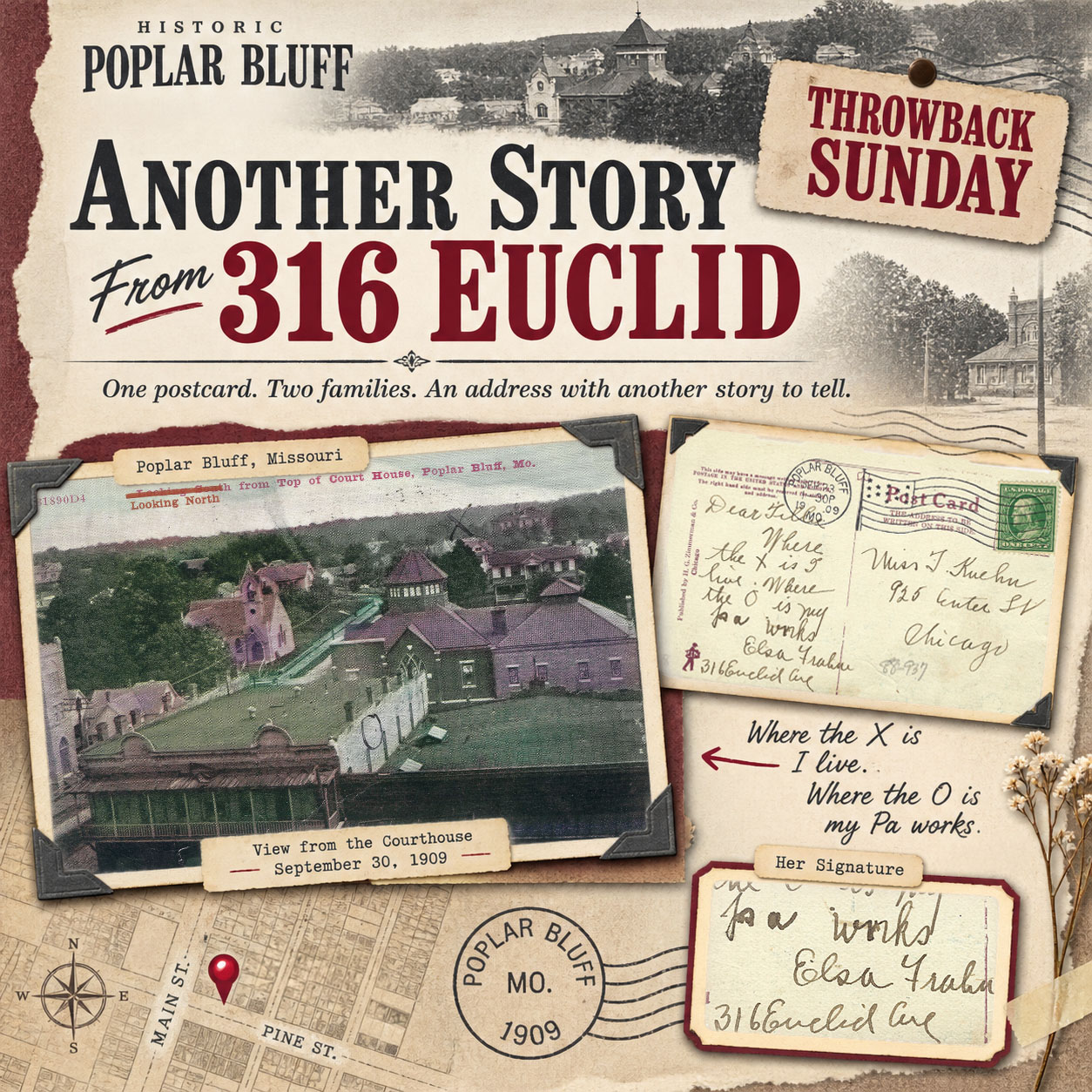
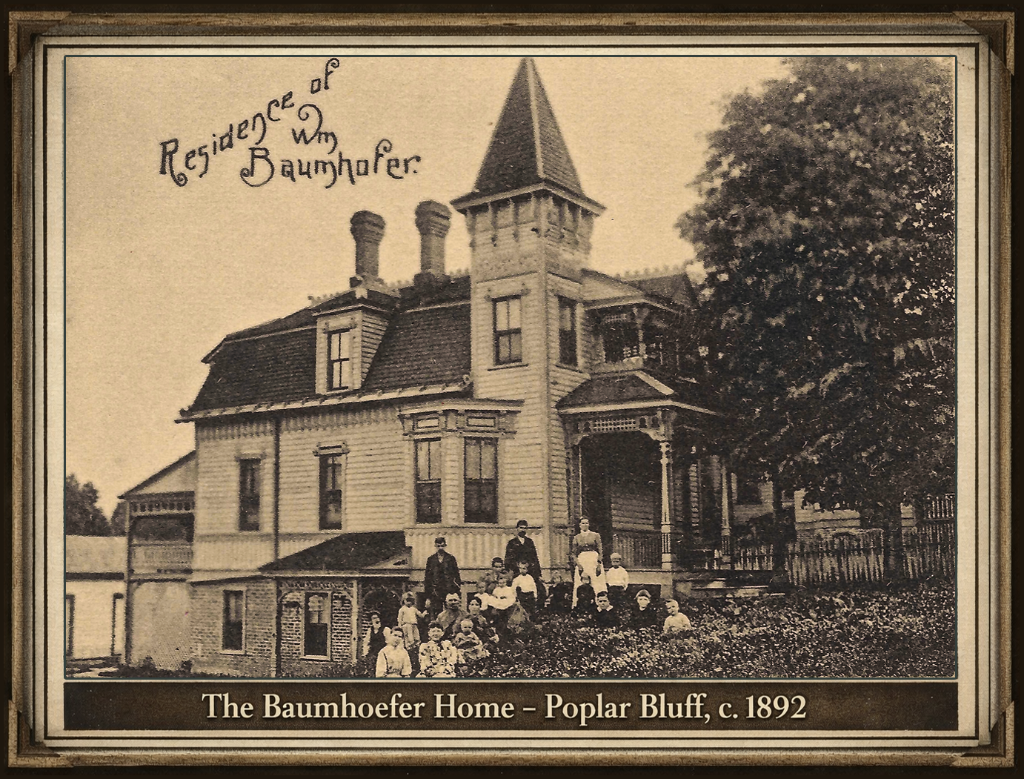
Their home was at 316 Euclid Avenue.
And it is with one of those children that our old yearbooks enter the story.
The Boy Who Was Already Looking Back
In September 1928, the Daily American Republic introduced readers to 15-year-old Paul C. Hays Jr.
The headline declared:
"This Poplar Bluff Boy Has Hobby For Collecting Antiques But Doesn't Let It Interfere With His Business."
It is difficult to imagine a better glimpse of the man he would become.
Young Paul was already assembling an eclectic collection of Indian relics, stamps, books, furniture, shells, firearms and other historical curiosities. He searched along the Black River for artifacts and read about Indian history so he could understand the things he discovered.
His stamp collection had begun several years earlier. His books included old volumes connected with Andrew Jackson and works that had reportedly passed through the Jackson family. He possessed an old spinning wheel, an unusual clock, shells, a Mexican War sword, an old shotgun and even specimens preserved in jars.
At only fifteen, Paul wasn't merely accumulating old things.
He was trying to understand them.
That makes the survival of his own 1929 and 1931 yearbooks particularly appropriate. Nearly a century later, Paul himself has become the history someone else is trying to understand.
From Poplar Bluff to Purdue
Paul Jr.'s interests extended well beyond antiques.
In 1935 he graduated from Purdue University with a Bachelor of Science in Electrical Engineering.
He subsequently worked professionally in engineering and construction. A wartime newspaper account later described him as having eight years of experience supervising construction work and noted that before entering military service he had been a designing engineer involved in war-plant construction.
Then came World War II.
Paul volunteered for the Navy in December 1942. He received his commission as a lieutenant junior grade in April 1943 and was promoted to full lieutenant in May 1944.
He served with the U.S. Naval Construction Battalions—the Seabees.
In August 1944, Poplar Bluff readers were given an unusually personal glimpse of his experience overseas when his parents received a letter from him from somewhere in France.
Paul described arriving from England and the realities of wartime life—the cold, the narrow streets, damaged buildings and the strange contrast between destruction and ordinary beauty.
He remarked upon flowers growing despite the war and described communities compressed by destruction. He also wrote about the unsettling sound of the German robot bombs.
Yet people, he observed, continued with their chores and tried to remain cheerful and busy.
Paul eventually served with both the Atlantic and Pacific fleets, completing his wartime service with the rank of lieutenant commander.
History Wasn't Just a Childhood Hobby
The teenager collecting relics along Black River never really disappeared.
Decades later, Paul Jr. was still researching.
A 1973 newspaper article found him speaking to the Genealogical Society of Butler County about researching family history. His own work extended across numerous family lines, and he advised researchers to visit cemeteries where relatives had lived, consult tombstones, family Bibles and census records, speak with elderly relatives, and use libraries and state archives.
He also offered advice that remains surprisingly applicable to historical research today: do the work yourself rather than immediately turning everything over to professionals, because clues overlooked in someone else's research might be important to the person pursuing a particular family.
Paul was an active member of both the Butler County Historical Society and the Genealogical Society of Butler County, helping plan and conduct programs for both.
His interest would also pass to another generation of the Hays family.
But before that connection appears, we have to return to another name written in one of our yearbooks.
Joel Hays and a Life in Music
The 1935 Bluff yearbook in our collection belonged to Paul's younger brother, Joel S. Hays.
Joel was born in Poplar Bluff on June 13, 1918.
His path would eventually become inseparable from music in downtown Poplar Bluff.
On February 20, 1947, Joel married Letha Montgomery. That same year, he opened The Record Shop, operating from the mezzanine of Fuller's Jewelry on South Main Street.
This was the era when recorded music meant shelves filled with phonograph records, and a 2007 retrospective recalled that the store sold 78-rpm records—including recordings that previously could be difficult to obtain locally.
Joel wasn't simply a merchant. He was an accomplished pianist who, according to that later account, had performed in 47 of the 48 states before opening his business.
Then his plans were interrupted.
On February 19, 1955, Joel was seriously injured in an automobile accident. His 1982 obituary states that the injuries prevented him from continuing to use his previous location as a store.
But that wasn't the end of the story.
Hays Music
In 1957, Joel and Letha opened a new business at 313 Vine Street.
The newspaper announcement described a completely remodeled store offering phonograph records, band and musical instruments, tape recorders, amplifying equipment, public-address systems and record players. Guitars included the Gibson line, and customers could use listening posts and a listening room to sample records.
The business would remain at 313 Vine for 32 years.
Joel died in May 1982 at age 63, but Hays Music did not disappear with him.
Letha and the family carried it forward.
In 1989, Hays Music moved to a larger location at 444 Vine Street. Over time, the inventory changed along with the music industry. Records gave way increasingly to instruments, amplifiers, speakers, microphones and equipment.
But the family business endured.
In 2007, Hays Music celebrated its 50th anniversary.
By then another generation—including Joel and Letha's son Greg Hays—was part of the story.
And Greg's interests would reconnect the musical branch of the family with his uncle Paul's love of history.
A Family Begins Preserving Downtown
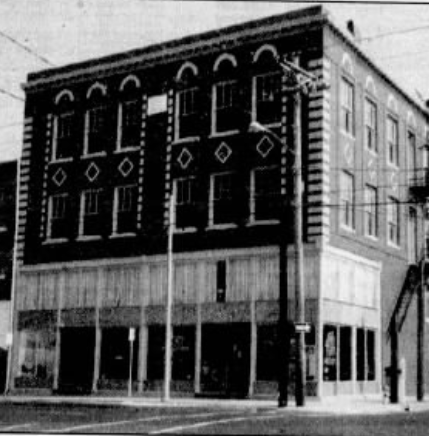
In 2001, Letha Hays, Greg Hays and Joel and Letha's daughter Luana Hays purchased one of downtown Poplar Bluff's most distinctive surviving buildings: the historic Begley Building at Vine and Broadway.
They knew what they were getting into.
The building had a long history reaching back to businessman George Begley Sr., a blacksmith, wagon manufacturer and merchant who came to Poplar Bluff in the nineteenth century.
The structure had changed substantially through the years. Newspaper research describes an earlier two-story building associated with Begley, followed by a 1908 rebuilding in which third and fourth floors were added.
The building even survived the devastating 1927 Poplar Bluff tornado, although its windows were blown out.
By the time the Hays family acquired it, the building needed considerable attention.
They replaced the roof, tuckpointed brickwork, installed new wiring and wood-encased windows, reopened windows that had been bricked shut, and worked on the storefronts. They also investigated restoring its old freight elevator.
For the family, this wasn't simply real estate.
It was preservation.
And in explaining his own interest in history, Greg Hays pointed backward one generation.
He credited his uncle Paul Hays—the same Paul Jr. who had been collecting historical objects as a 15-year-old in 1928—with helping inspire that interest.
The thread had survived.
The Hays Family and the Rodgers Theatre
That combination of music and preservation eventually reached another familiar Poplar Bluff landmark.
The Rodgers Theatre.
In 2008, as work continued to bring activity back to the historic theatre, Greg Hays spoke about what the Rodgers meant to people who had grown up in Poplar Bluff.
"Anybody that grew up here has a soft spot in their heart for Rodgers."
Greg jokingly noted another connection: he and the theatre were both products of 1949.
But Hays Music's connection to the Rodgers went beyond nostalgia.
The business donated a Mackie 6,000-watt sound system, valued in the newspaper account at approximately $5,000, to help the theatre host concerts and live performances. Hays Music also served as an advance ticket location for performances there.
There was an even more personal family connection.
The Rodgers Theatre was part of the story of Greg's own parents.
Joel and Letha's relationship had roots there, adding the theatre to the places intertwined with the Hays family story—not merely as a building they later supported, but as part of their family's memories.
Years after Joel's death, the next generation was helping keep that same theatre alive.
More Than a Music Store
Hays Music itself had become part of downtown life.
The family participated in downtown activities and traditions. In December 2010, a photograph in the Daily American Republic showed the Hays Music storefront decorated for Christmas. Hays Music and the Vine Street Apartments were recognized as winners in a downtown holiday decorating contest.
It is a small detail compared with war service, banking careers and historic preservation.
But perhaps those small details are what make local history feel like home.
For generations, people didn't necessarily think of Hays Music as "history."
It was simply somewhere you went.
Some bought their first guitar there. Others needed strings, an amplifier or a repair. Some browsed records. Some took lessons. Some simply knew the storefront because they had walked or driven past it for years.
By 2020, that long chapter was coming to an end. A photograph shared by local photographer Travis Gowen as Hays Music was closing captured the historic Begley Building from above and marked the passing of a business that had existed across generations.
The exact closing date is something we have not yet established from the material collected for this story, so we will leave it there rather than assign the business a date the evidence does not support.
Other Branches of the Family
Paul Jr. and Joel provide the strongest connections to the objects that began our research, but theirs were not the family's only stories.
Their brother Miles C. Hays, born in 1914, spent 41 years with American National Insurance Company. He later served on the Commerce Bank board and supported Three Rivers Community College.
Their sister Elsa Beth Hays, born in 1922, followed a very different path. She graduated from Lindenwood College in St. Charles and attended the Alviene School of Drama in New York City. Her obituary records that she was a member of the Actors Equity Guild.
And their mother Buena Vista lived until 1984, reaching the age of 93 and witnessing much of what her children had built.
Sixty-Two Years at One Bank
Paul Sr. had died almost two decades earlier, in January 1966.
His obituary distilled an extraordinary career into only a few lines.
He had been an employee of the same banking institution for 62 years and was chairman of the board of State Bank and Trust Company when he died.
Think about that span.
He entered banking in 1904 as a 16-year-old earning $15 a month.
He lived to see automobiles replace horses on Poplar Bluff's streets, watched the city grow, saw his children graduate and establish lives of their own, sent a son overseas during a world war, and ultimately watched the little bank in which he had started as a teenager become a major local institution.
Meanwhile, his children were building stories of their own.
And It All Came Back to Three Books
Which brings us back to where we started.
Three old yearbooks.
A 1929 Bluff belonging to Paul C. Hays Jr.
A 1931 Bluff belonging to Paul C. Hays Jr.
And a 1935 Bluff belonging to Joel Hays.
When these books were printed, none of what came afterward was known.
Paul Jr. hadn't yet crossed an ocean in wartime. He hadn't become one of the people preserving Butler County's genealogy and history.
Joel hadn't opened a record shop. There was no Hays Music Store. He hadn't married Letha. Greg and Luana hadn't been born.
The family hadn't purchased the Begley Building.
Hays Music hadn't helped the Rodgers Theatre.
They were simply young people in Poplar Bluff whose names happened to be written inside their school yearbooks.
Nearly a century later, those names gave us somewhere to begin.
That may be one of the greatest values of keeping old photographs, newspapers, postcards, yearbooks and family objects. Individually, they can seem insignificant.
But occasionally one survives long enough to ask us a question.
Who did this belong to?
And if we're willing to follow the answer, sometimes an entire piece of our community comes back into view.
Photos

Composite graphic illustrating the story of the Paul C. Hays family, their 1929 yearbook, home, and community legacy in Poplar Bluff
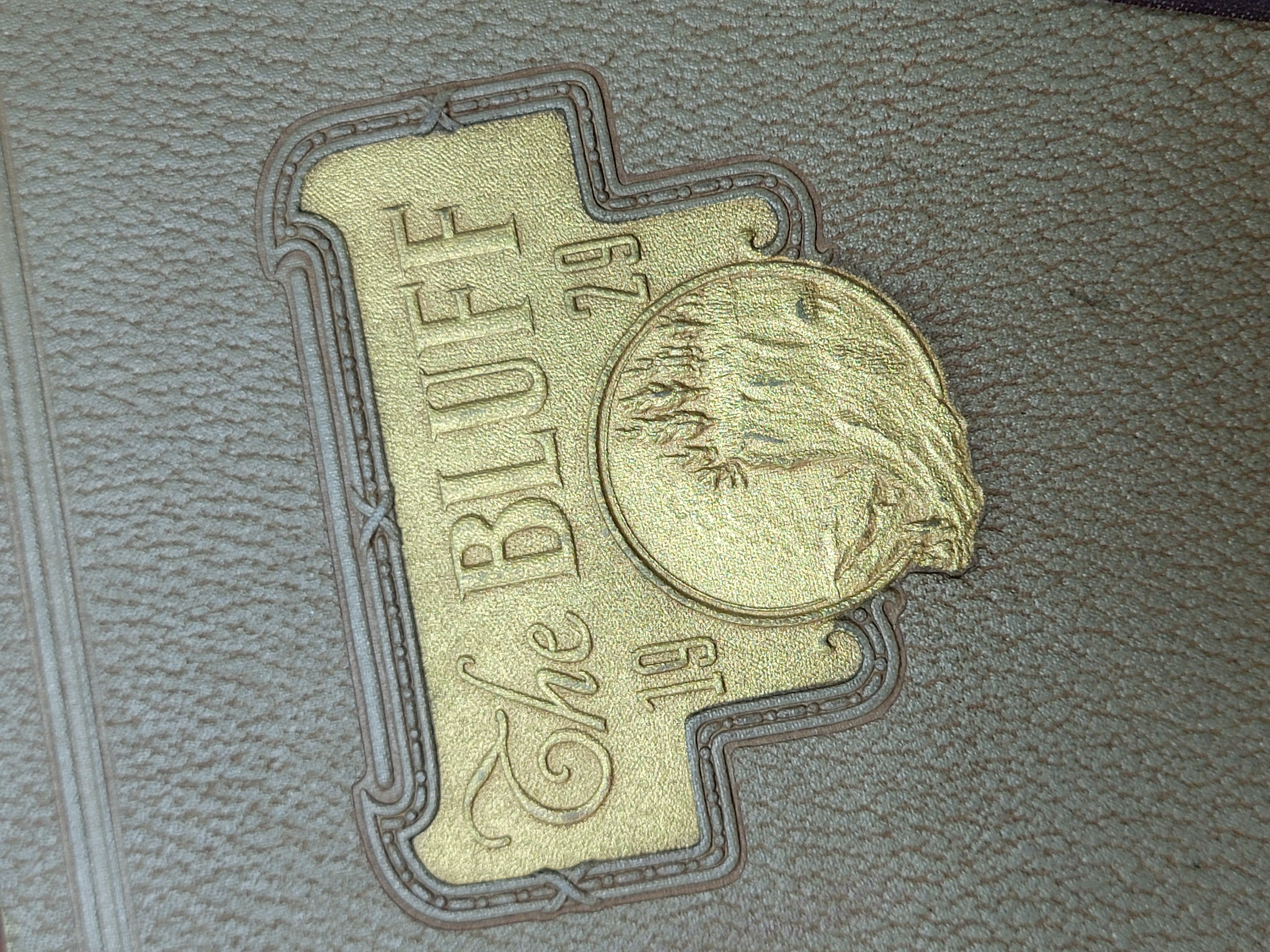
Embossed cover of the 1929 Bluff yearbook belonging to Paul C. Hays Jr.
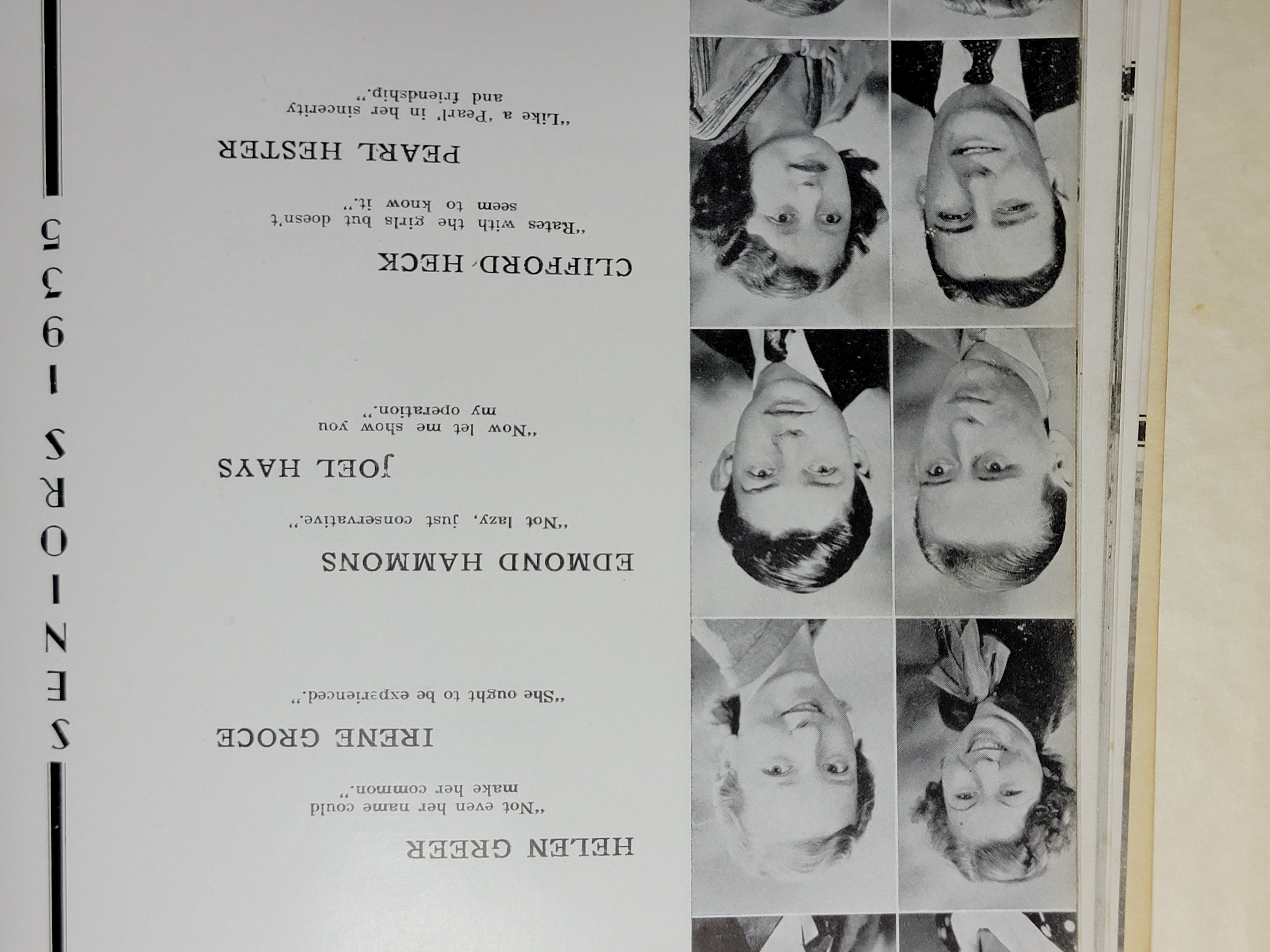
Senior portrait of Joel Hays in the 1935 Poplar Bluff High School yearbook
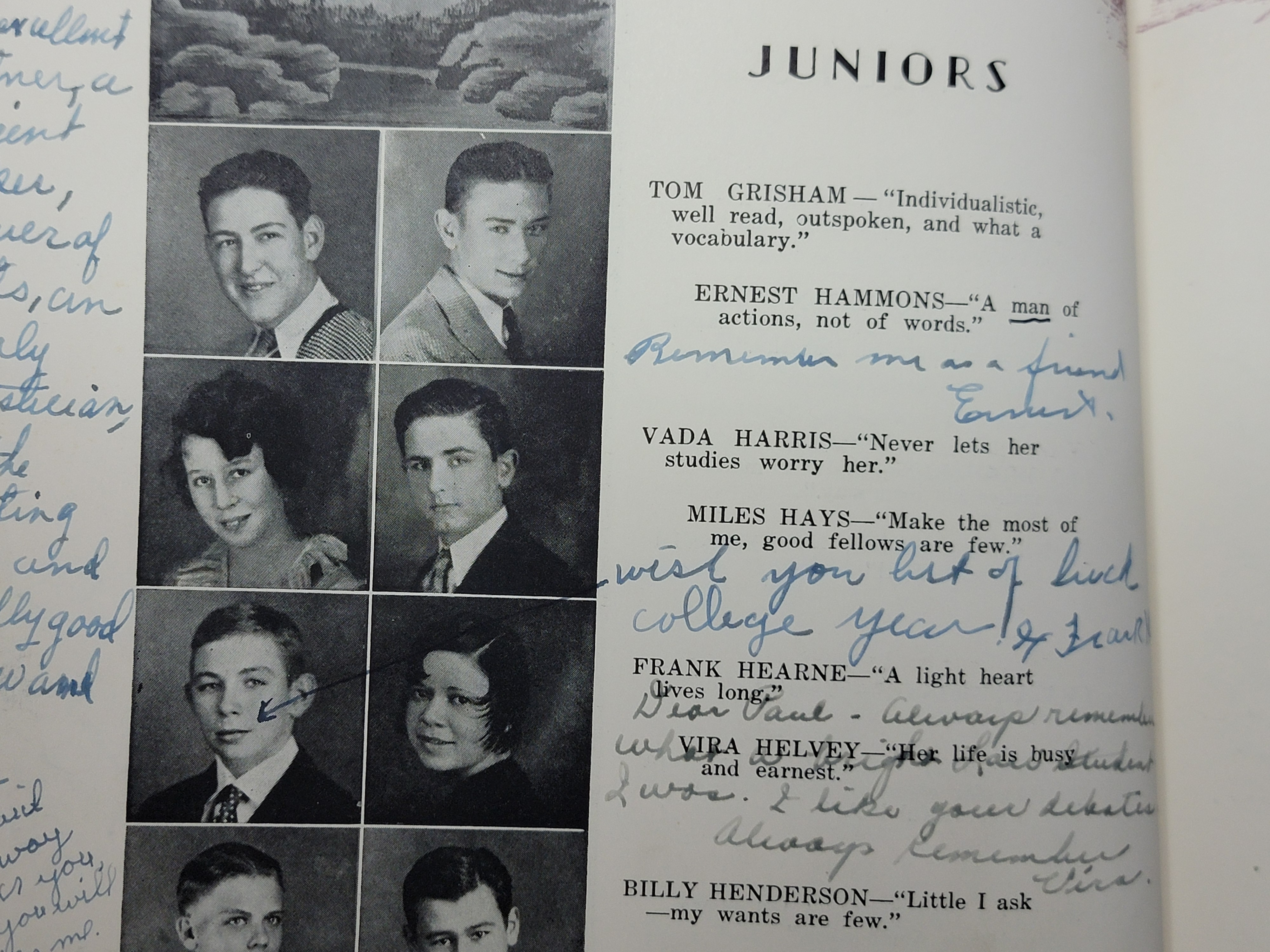
Junior class page featuring Miles Hays in the Poplar Bluff High School yearbook
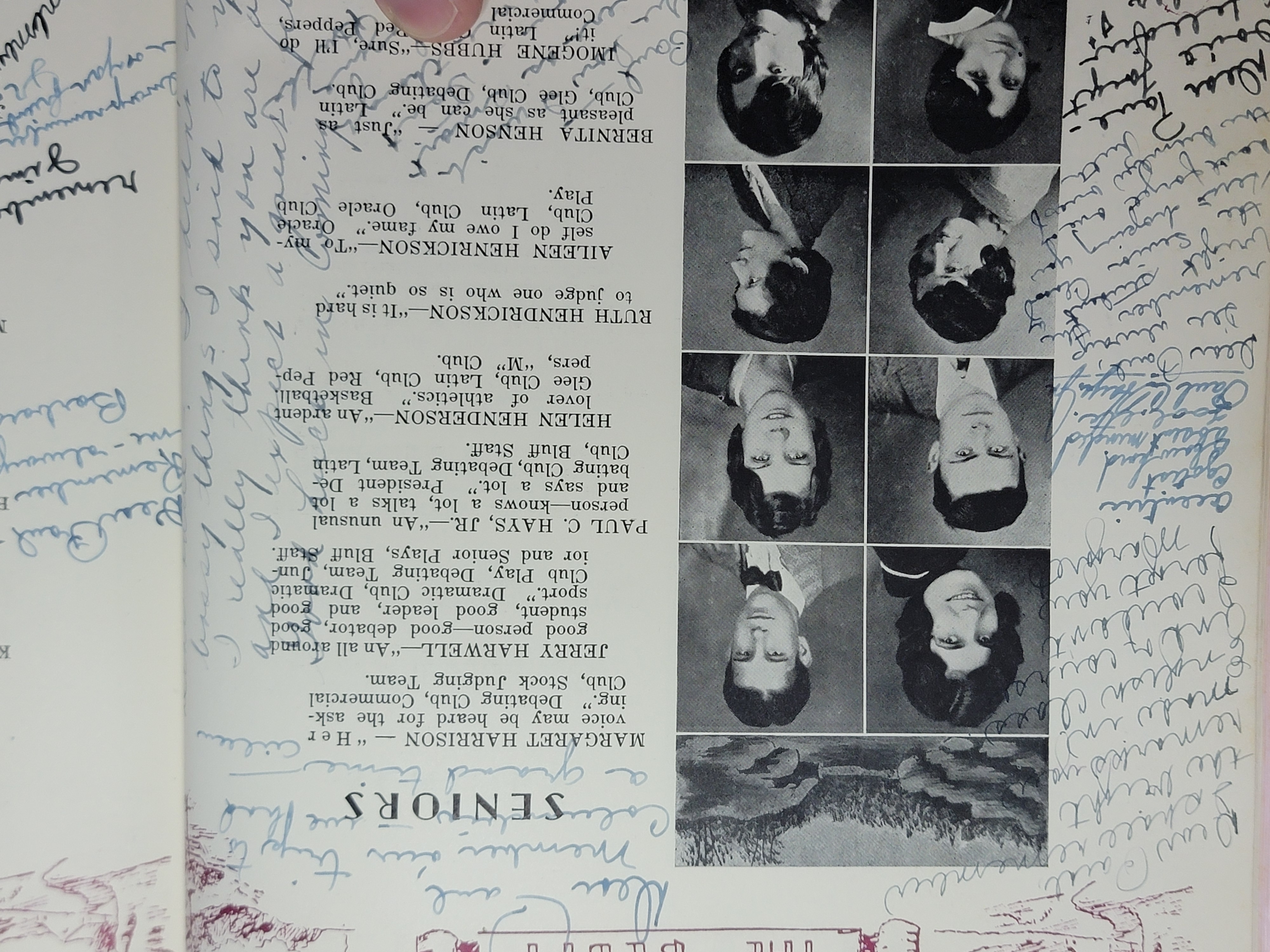
Senior portrait and activities listing for Paul C. Hays Jr. with classmate inscriptions
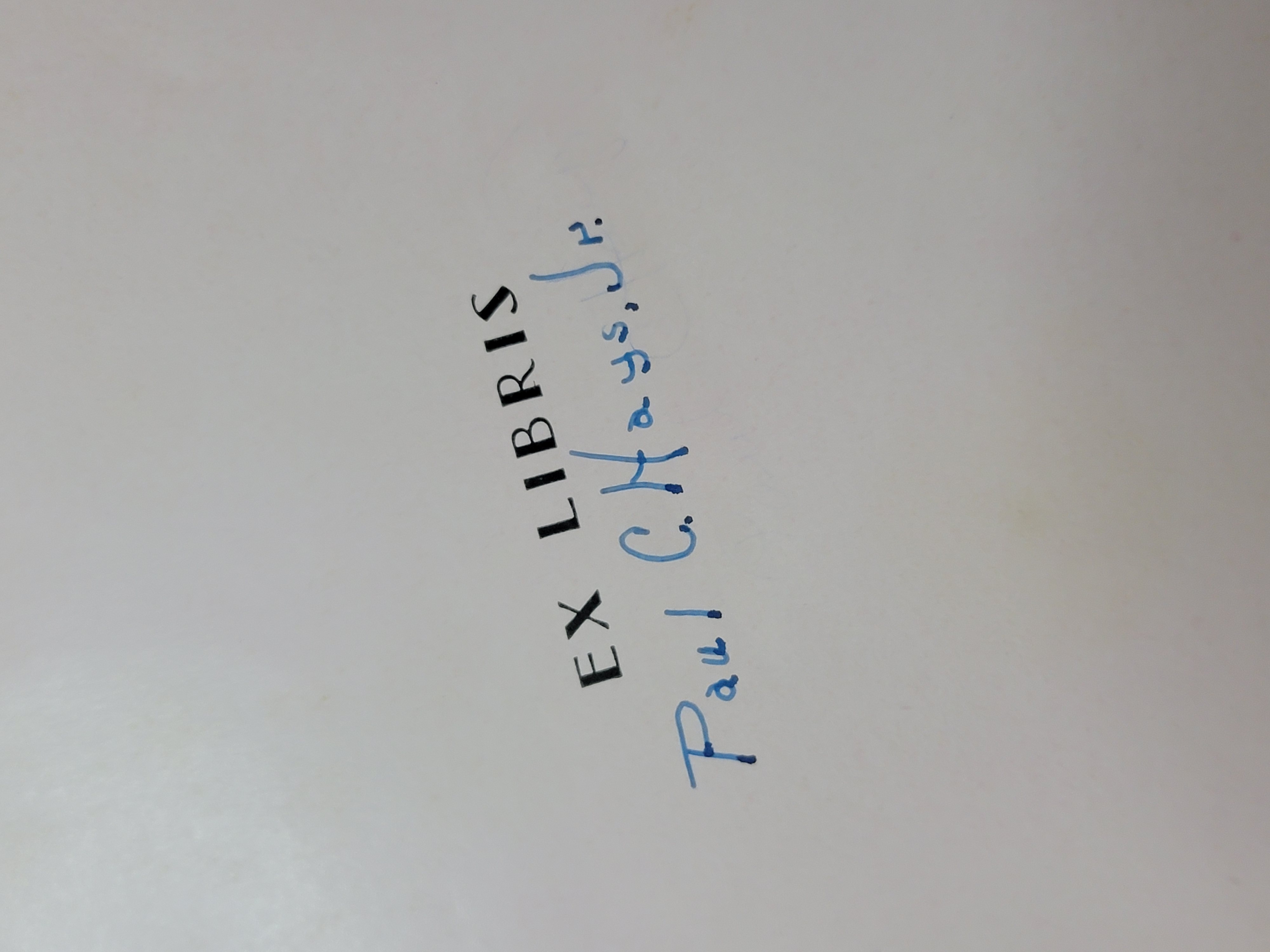
Bookplate inscription reading 'Ex Libris Paul C. Hays, Jr.' inside the yearbook
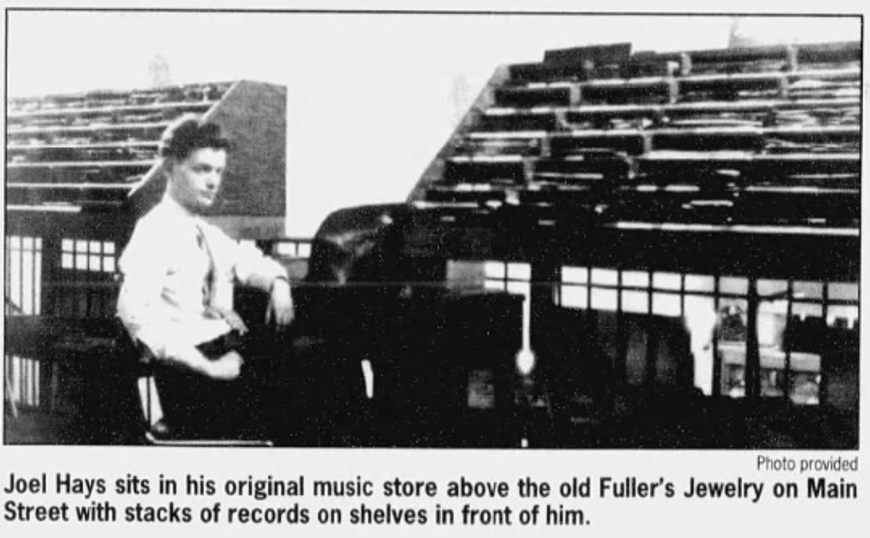
Joel Hays seated inside his original record shop above Fuller's Jewelry on Main Street
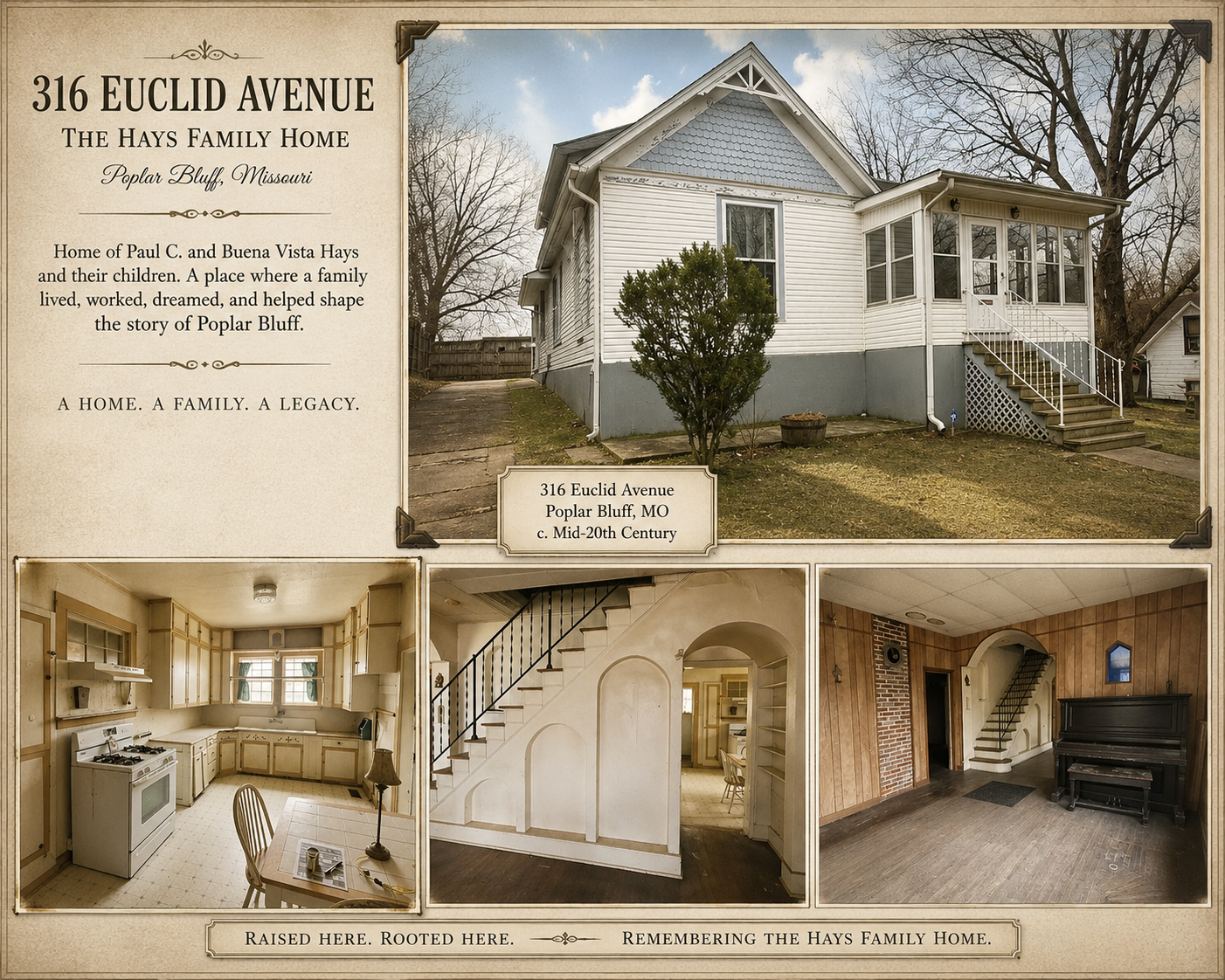
Photographic composite of the Hays family residence at 316 Euclid Avenue, showing exterior and interior rooms
Historic Poplar Bluff
Story Contributor
Source:
Historic Poplar Bluff research collection
Related Historic Sites


People in This Story